Why Most Startup Growth Strategies Fail (And What Actually Works)
Discover why most startup growth strategies fail. Learn what actually works for effective business growth and a winning business model.
6/3/20265 min read
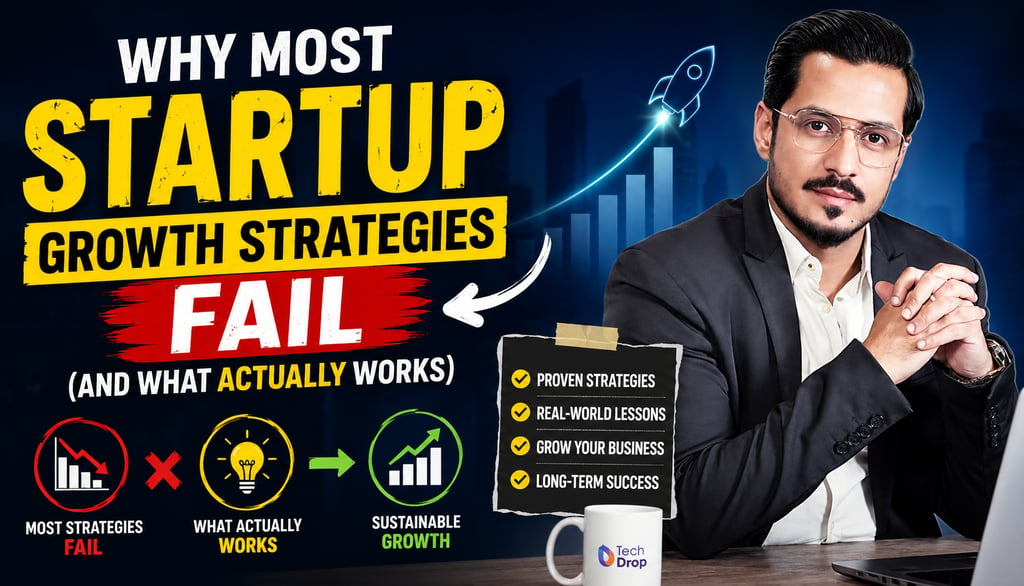
When people talk about startup growth strategies, they often focus on shortcuts, trends, and overnight success stories. In my experience, that is rarely how real business growth happens, especially for small businesses. I have built businesses across Pakistan, the UAE, and the United States, and one thing I've learned is that growth is never accidental. It comes from clear planning, disciplined execution, and a willingness to adapt.
In this article, I will share the lessons I have learned while building companies from the ground up. If you are looking for practical business growth strategies, want to understand startup growth, or are searching for a strategy for startups that creates lasting results, this guide is for you.
Instead of chasing hype, I will explain what actually works when you want to grow your business and create sustainable success.
Why Do Most Startup Growth Strategies Fail?
One of the biggest mistakes I see founders make is trying to copy someone else's success. Every startup operates in a different business environment. What works for a technology company may fail completely for a hospitality brand. Instead of understanding their customers' needs, many founders jump from one trend to another.
I learned this lesson early in my entrepreneurial journey. Many startups focus on growth hacks rather than building a strong foundation. Quick wins may create temporary excitement, but they rarely lead to long-term growth. A successful business requires patience, consistency, and a clear business strategy.
Another reason many growth strategies fail is the lack of a clear growth plan. Founders often chase every opportunity without evaluating whether it aligns with their business goals or contributes to viral growth. Growth without direction creates confusion, wastes resources, and slows progress.
What Makes a Strong Foundation for Startup Growth?
Before thinking about scaling, every startup must build a strong foundation. In my companies, whether it was Tech Drop Pvt. Ltd. or Creative Creations, I always focused on solving real problems before focusing on expansion.
A strong foundation starts with a clear business model. You need to understand how your startup business creates value, generates revenue, and serves customers. Without this clarity, even the best growth opportunities can become distractions.
I also believe that sustainable business practices matter from day one. Building systems, documenting processes, and improving productivity help prepare a company for future growth. These practices may not seem exciting, but they create stability during difficult growth phases.
How Important Is Understanding Your Target Market?
Many founders invest heavily in products and services without fully understanding their target audience. In my experience, this is one of the fastest ways to waste money and time.
Effective business growth begins with market research.
You need to know who your customers are
What problems do they face
Why would they choose your solution?
When I launch a new business initiative, I spend significant time listening to potential customers before making major decisions.
Understanding your target market also helps you make informed decisions. You can create better offers, improve customer acquisition, and focus resources where they have the greatest impact.
The more you understand your market, the easier it becomes to identify opportunities that competitors overlook.
Why Is Your Value Proposition the Key to Business Growth?
Every successful startup needs a strong value proposition. Simply put, people need a clear reason to choose your product or service over alternatives.
When I built businesses in different industries, I noticed that customers rarely buy because of features alone. They buy because they believe a solution will improve their lives or businesses. Your value proposition should clearly communicate that benefit.
A strong value proposition also helps increase market share. It strengthens your brand, improves customer retention, and makes marketing more effective. If customers cannot quickly understand why your company matters, growth becomes much harder.
How Can Customer Experience Drive Sustainable Growth?
One of the most overlooked startup growth strategies is improving customer experience. Many companies spend thousands attracting a new customer while neglecting the people they already serve.
I have always believed that existing customers are one of the most valuable assets a company can have. Happy customers buy again, refer others, and strengthen your reputation. This creates organic growth that is both affordable and sustainable.
Customer experience influences every aspect of the business. From communication and support to delivery and follow-up, every interaction matters. Companies that consistently exceed expectations build trust, and trust leads to revenue growth.
What Marketing Strategies Actually Work for Startups?
Many founders assume marketing requires a huge budget. That has not been my experience. Some of the most effective business growth strategies involve consistency rather than spending.
Content marketing has been one of the most powerful tools across several ventures. By sharing useful information and building authority, businesses can attract qualified leads without relying entirely on paid advertising.
I also recommend combining digital marketing with relationship building. Partnerships, referrals, community engagement, and personal branding can create opportunities for growth that traditional business advertising often misses.
How Do You Identify Growth Opportunities Without Wasting Resources?
Every founder wants growth opportunities, but not every opportunity deserves attention.
One of the hardest lessons I learned was knowing when to say NO.
To identify growth opportunities, I evaluate whether they support our overall growth approach and long-term objectives. If an opportunity requires significant resources but offers little strategic value, it is often better to walk away.
Looking at strengths and weaknesses honestly is also important. Self-awareness helps companies pursue growth where they have a competitive advantage rather than entering crowded markets without preparation.
When Should a Startup Expand Into New Markets?
Expanding into new markets can unlock major opportunities for growth, but timing matters. I have seen businesses fail because they expanded too early.
Before expanding into new regions, make sure your current operations are stable. Your customer base should be growing, your processes should be repeatable, and your finances should support the move.
A successful expansion strategy requires preparation. Research local demand, understand competition, and adapt your offerings if necessary. Expanding into new locations should strengthen the company, not create unnecessary risk.
How Can the Right Startup Team Accelerate Growth?
No founder succeeds alone. Behind every successful business is a dedicated startup team committed to a shared vision.
As businesses grow, hiring new talent becomes essential. However, I always prioritize culture and attitude over technical skills alone. Skills can be taught, but values are much harder to change.
A strong team supports innovation and growth. It improves business operations, encourages collaboration, and allows leaders to focus on strategic decisions rather than daily firefighting.
What Does Long-Term Strategic Growth Really Look Like?
Many entrepreneurs focus only on the next quarter. I prefer to think about long-term success. Real strategic growth is about building systems that continue to create value for years.
This includes developing new products, exploring different growth paths, and investing in growth initiatives that strengthen the company over time. It also means staying adaptable as markets evolve.
The right growth strategy is not about chasing every trend. It is about creating a comprehensive growth framework that balances ambition with discipline. That is how companies move from a small startup to an organization with lasting impact.
Key Takeaways
Build a strong foundation before focusing on scaling.
Understand your target audience through continuous market research.
Create a clear value proposition that differentiates your brand.
Prioritize customer retention alongside customer acquisition.
Use content marketing and relationship building to support growth.
Focus on opportunities that align with your business goals.
Enter new markets only when your operations are ready.
Invest in people and build a high-performing team.
Develop systems that support long-term growth.
Remember that sustainable growth always beats short-term hype.
In my journey as an entrepreneur, I have learned that growth is not about moving fast. It is about moving in the right direction. When founders focus on creating value, serving customers, and building strong systems, growth becomes a natural result rather than a constant struggle.