

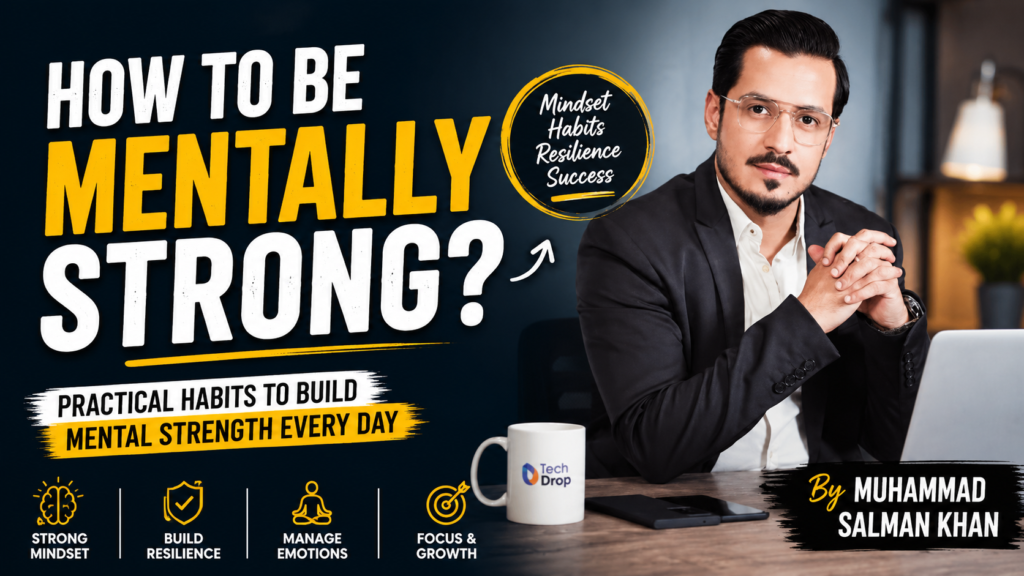
Building a successful business, leading teams across different countries, and creating meaningful impact has taught me one powerful lesson: success starts in the mind.
Over the last 15 years, I’ve faced uncertainty, setbacks, failures, and moments when giving up felt easier than pushing ahead. Yet every challenge helped me become more mentally tough and mentally stronger.
Mental strength isn’t something you’re born with. It’s a skill you build through daily choices, consistent habits, and the willingness to keep going when life gets difficult.
In this article, I’ll share the lessons that helped me develop mental and emotional strength while building businesses across Pakistan, the UAE, and the United States. You’ll learn practical strategies to strengthen your mindset, improve resilience, and handle challenges with confidence.
What Does It Mean to Be Mentally Strong?
Many people think mental strength means hiding their feelings or pretending everything is fine. That’s not true.
Mental strength is the ability to stay focused, make good decisions, and keep moving forward even when circumstances become difficult. It means understanding your emotions without allowing them to control your actions.
A strong person doesn’t avoid problems. Instead, they face challenges directly and learn from every experience.
Throughout my entrepreneurial journey, I’ve learned that mentally strong people recognize that success is not about avoiding failure. It’s about how quickly you recover after a setback.
Whether you’re building a company, leading a team, or working toward personal goals, mental fortitude helps you stay committed when obstacles appear.
According to experts in psychology, mental strength combines emotional strength, discipline, adaptability, and self-awareness. These skills needed for long-term success can be developed by anyone who is willing to practice consistently.
Why Is Mental Strength Important in Business and Life?
Life constantly tests us.
Markets change. Partnerships fail. Opportunities disappear. Personal struggles affect our professional performance.
I’ve experienced all of these situations while building businesses from the ground up.
When I launched my first venture in Dubai, resources were limited, and uncertainty was high. Later, when I returned to Pakistan, I faced an entirely new set of challenges. Each experience taught me that success takes mental strength long before it creates financial rewards.
Mental strength allows us to tolerate uncertainty without becoming overwhelmed.
It helps us adapt when circumstances change and prevents fear from making decisions for us.
Strong individuals understand that life is unpredictable. Instead of resisting change, they develop adaptability and focus on what they can influence.
When you develop mental and emotional strength, you become more productive during stressful situations. You stop reacting impulsively and start responding with purpose.
That shift improves your relationships, leadership abilities, and overall well-being.
What Traits Define a Strong Person?
People often ask me what separates successful entrepreneurs from everyone else.
In my experience, it isn’t intelligence, luck, or access to resources.
The difference is in mindset.
A strong person usually shares several common qualities:
- Self-discipline during difficult moments
- The ability to take responsibility for mistakes
- Emotional control under pressure
- A willingness to learn from bad experiences
- Consistent positive thinking
- Long-term focus
- Empathy toward others
- Adaptability when plans change
One important trait I notice in successful leaders is accountability.
They don’t blame circumstances, competitors, or the economy for every challenge.
Instead, they acknowledge what happened, learn from it, and focus their energy on moving forward.
Another important attribute is resilience.
People with resilience don’t avoid pain or disappointment. They persevere despite it.
That ability to recover quickly creates a significant advantage in both business and life.
How Do Mentally Strong People Manage Their Emotions?
One of the biggest misconceptions about emotional strength is that mentally strong people don’t feel fear, frustration, or disappointment.
The truth is, they experience the same emotions as everyone else.
The difference lies in how they respond.
Mentally strong people don’t allow temporary emotions to make permanent decisions.
When I face difficult situations, I pause before reacting. I ask myself whether my response is based on facts or irrational assumptions.
This simple habit helps me regulate my emotions and maintain clarity.
You cannot control every external event, but you can regulate your emotions and choose your response.
That takes mental discipline.
Research in psychology shows that people who develop emotional awareness make better decisions under pressure.
They become more self-aware and understand how their thoughts influence behavior.
Instead of suppressing emotions, they process them in healthy ways.
They practice mindfulness, stay focused on the present moment, and avoid letting negativity paralyze their progress.
A trusted coach, mentor, psychotherapist, or licensed clinical social worker (LCSW) can also provide valuable insight during difficult periods.
Seeking support is not a weakness. It is wisdom.
What Are the Things Mentally Strong People Don’t Do?
Author and psychotherapist Amy Morin became well known for identifying the 13 things mentally strong people avoid.
Her work offers a practical framework for developing better habits and stronger decision-making.
Here are some things mentally strong people don’t do:
- They don’t waste time feeling sorry for themselves.
- They don’t allow other people to control their emotions.
- They don’t give away their power.
- They don’t fear calculated change.
- They don’t try to please everyone.
- They don’t feel entitled to immediate results.
- They don’t say yes to every obligation.
- They don’t waste time on things they can’t control.
- They don’t let one failure define their future.
Many entrepreneurs struggle because they spend too much energy worrying about outcomes they can’t control.
Instead of focusing on external circumstances, mentally strong people focus on their actions.
They understand that life is not fair, but they refuse to use that reality as an excuse.
They set a healthy boundary around their time, energy, and attention.
Most importantly, they know that saying no to unnecessary obligations creates space for meaningful work.
These are the things mentally strong people don’t practice because they know those habits reduce productivity and emotional strength.
How Can You Build Resilience During Difficult Times?
Every entrepreneur eventually comes face-to-face with adversity.
The question is not whether challenges will happen.
The real question is how you respond when they do.
I’ve faced business setbacks, difficult decisions, financial pressure, and unexpected changes throughout my journey.
Each experience reinforced one truth: resilience grows through action.
When you encounter a setback, avoid asking, “Why is this happening to me?”
Instead, ask, “What can this teach me?”
That simple shift creates a more constructive outlook.
Resilient people adapt quickly because they understand that life keeps moving.
They don’t stay trapped in disappointment.
Instead, they focus on solutions and keep moving forward.
Building resilience also requires patience.
Progress isn’t always visible immediately.
There will be moments when success feels distant.
Keep showing up anyway.
The ability to persevere during uncertain times often separates those who thrive from those who quit too early.
Why Do Healthy Habits and Exercise Matter?
Mental strength is deeply connected to physical health.
You cannot expect your mind to perform at its best if you consistently ignore your body.
Simple healthy habits can dramatically improve your mental health and emotional stability.
These habits include:
- Regular exercise
- Quality sleep
- Balanced nutrition
- Daily reflection
- Consistent routines
- Limiting unnecessary distractions
Exercise helps reduce stress, improve cognitive performance, and increase emotional balance.
When your body feels stronger, your mind often follows.
I’ve learned that sustainable success requires energy management, not just time management.
Your physical health influences your focus, decision-making ability, and productivity.
If you want to become mentally stronger, start by taking care of your body.
Small improvements repeated consistently create lasting results.
How Can Gratitude and Mindfulness Improve Your Outlook?
In business and life, it’s easy to focus only on what is missing.
We chase bigger goals, higher revenue, and greater achievements.
While ambition matters, gratitude keeps us grounded.
Practicing gratitude doesn’t mean ignoring problems.
It means choosing to recognize something positive even during difficult times.
This habit improves your outlook and reduces unnecessary stress.
I make time each day to reflect on what I’m thankful for, whether it’s my family, my team, my opportunities, or the lessons learned from challenges.
Mindfulness has also become an important part of my routine.
Being mindful means staying connected to the present moment instead of constantly worrying about the future.
It helps reduce emotional overwhelm and improves decision-making.
When combined with gratitude, mindfulness creates the mental space needed to respond thoughtfully rather than react impulsively.
How Do You Create Boundaries Without Trying to Please Everyone?
Many ambitious people struggle because they say yes too often.
They feel an obligation to meet every request, solve every problem, and please everyone.
I learned this lesson the hard way.
Trying to satisfy every expectation eventually leads to burnout.
Your personal needs matter.
Protecting your time and energy is essential for long-term success.
Creating clear boundaries doesn’t make you selfish.
It makes you more effective.
You can be compassionate, considerate, and supportive while still protecting your priorities.
Mentally strong people understand that every commitment comes with a cost.
Before saying yes, ask yourself whether the opportunity aligns with your goals and values.
Remember, every unnecessary obligation reduces your ability to focus on meaningful work.
How Can You Become Mentally Stronger Every Day?
Becoming mentally stronger isn’t about making one big change.
It’s about building small habits consistently.
Here are practical steps that helped me develop greater mental fortitude:
- Start your day with intention.
- Focus on what you can control.
- Learn from failure instead of avoiding it.
- Practice gratitude daily.
- Limit exposure to negativity.
- Build supportive relationships.
- Invest in your physical health.
- Develop mindfulness habits.
- Seek guidance from a mentor, coach, or practitioner.
- Reflect regularly on your progress.
Remember, growth takes time.
There will be moments when doubt appears.
There will be days when progress feels slow.
Keep going.
Mental strength develops through repetition, consistency, and the courage to keep showing up.
Understand that life will test your patience, your discipline, and your commitment.
Those challenges are not obstacles to your growth.
They are the path to it.
As Amy Morin reminds us through the concept of the 13 things mentally strong people avoid, true strength comes from your daily choices.
You don’t need to be perfect.
You simply need to keep learning, adapting, and striving to become better than you were yesterday.
Final Thoughts
Over the years, I’ve learned that success in business and life isn’t determined by how many opportunities you get. It’s determined by how you respond when things don’t go as planned.
Building companies across different industries and countries has taught me that challenges are inevitable. There will be setbacks, failures, criticism, and moments of uncertainty. What matters most is your ability to stay focused, adapt, and keep moving forward.
Being mentally strong doesn’t mean you never struggle. It means you choose growth over excuses, discipline over comfort, and action over fear. Every difficult experience carries a lesson if you’re willing to learn from it.
Remember, you don’t build mental strength overnight. You build it through the small decisions you make every day, how you handle pressure, how you treat others, and how you respond when life tests your resilience.
Start where you are. Focus on what you can control. Protect your energy, invest in healthy habits, and never stop learning.
Most importantly, believe in your ability to grow.
If I could build businesses from the ground up with nothing but a vision, determination, and an unwavering belief in possibilities, then you can overcome your challenges, too.
Your circumstances do not define your future. Your mindset, your actions, and your willingness to keep going will.
Stay resilient. Stay purpose-driven. Keep building the life you want, one day at a time.