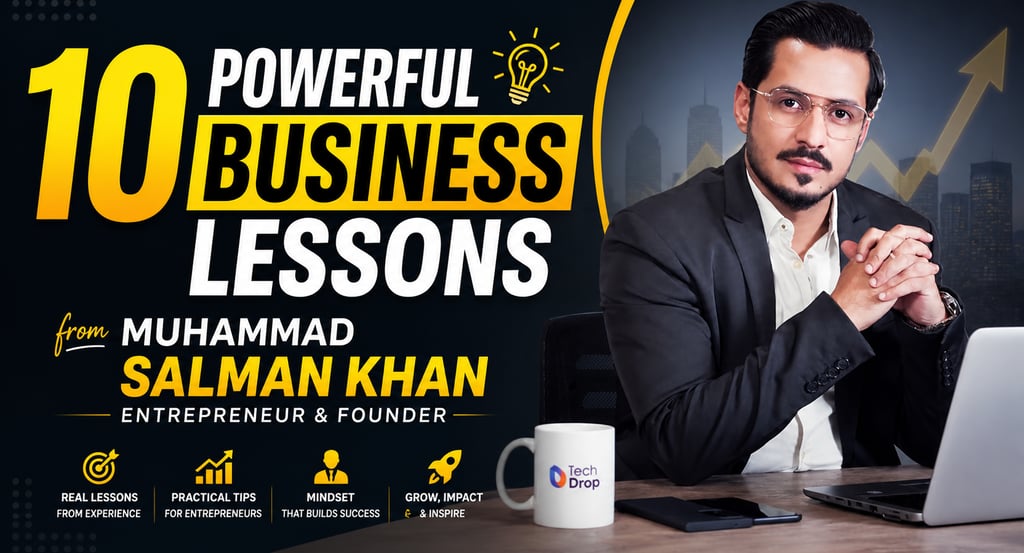
10 Powerful Business Lessons from Muhammad Salman Khan, Entrepreneur and Founder
Discover 10 powerful business lessons from Muhammad Salman Khan that can inspire and transform your entrepreneurial journey. Learn key strategies for success today!
5/1/20265 min read
I’m Muhammad Salman Khan, and in this article, I want to share the lessons that shaped my journey as an entrepreneur. From starting with limited resources to building businesses across Pakistan, the UAE, and beyond, every step taught me something valuable.
Many people know names like Salman Khan of Khan Academy, the famous founder who helped millions of students through free learning. His story as a tutor and nonprofit builder is inspiring. My path is different, but the core idea is the same: solve problems, help people, and keep building.
If you want real business advice in simple words, this article is worth reading. These are practical lessons I learned through action, mistakes, and growth.
1. Why Entrepreneurship Starts With Belief
Before money, before contacts, before a team, I had belief. That was my first asset. Many people wait for the perfect time, but success often starts when conditions are not perfect.
When I began, I had no giant office or famous name. I had a mindset that told me progress matters more than comfort. That belief helped me launch ideas even when results were uncertain.
If you want to grow, start now. Confidence grows after action, not before it.
2. How I Built My First Venture With Limited Resources
My early business journey started in the UAE. I entered a competitive market with limited resources, but I refused to use that as an excuse.
I focused on what I could control:
Service quality
Speed
Relationships
Reputation
Daily hustle
That first venture taught me a huge lesson. You do not need everything to start. You need enough to move.
Many founders waste time chasing perfection. I chose movement.
3. Why Solving Real Problems Wins the Market
Every successful company should solve problems. If your product does not help people, growth becomes hard.
I always ask:
What pain exists?
Who needs help now?
Can we make life easier?
This simple thinking helped me enter different industries. Whether it was hospitality, digital media, or wellness, I looked for real-world needs.
The market rewards businesses that create useful answers.
4. What Pakistan Taught Me About Opportunity
When I returned to Pakistan, many people asked why I would leave Dubai after a decade in Dubai. My answer was simple: OPPORTUNITY.
I saw talent, energy, and untapped potential. I wanted to uplift local businesses and support social causes through smart investment and leadership.
Pakistan has young minds ready to build. It has people hungry to learn, create, and lead. That energy is powerful.
Sometimes the biggest opportunity is where others only see problems.
5. How AI and Tech Are Changing Business
Today, AI is changing how we work, sell, and manage teams. I see it as a tool, not a threat.
We use AI for:
Better customer service
Faster decisions
Smarter systems
Growth planning
Content and digital tasks
Tech gives small businesses power once reserved for giant companies. A strong platform can help a startup compete globally.
The key is to learn fast and adapt faster.
6. Why Long-Term Vision Beats Quick Money
Many people chase quick WINS. I prefer long-term VALUE.
Some businesses make money fast but fade quickly. Others take time but become strong, trusted brands. I chose the second path.
My vision has always been clear: build companies that last, employ people, and create impact. That means patient decisions, strategic planning, and steady improvement.
Shortcuts can pay today. Good systems pay for years.
7. Can Storytelling Help You Build a Brand?
Yes, absolutely. Storytelling is one of the most underrated business tools.
People remember stories more than ads. They connect with struggle, growth, and purpose. That is why I openly share my self-made journey, lessons, and failures.
Your brand story should answer:
Why did you start?
What do you believe?
Who do you help?
Why should people trust you?
Even TED speakers understand this power. Stories build trust faster than slogans.
8. Why Every CEO Needs Discipline and Empathy
Being a CEO is not only about giving orders. It is about leading people.
Discipline helped me stay focused through hard seasons. Empathy helped me understand my team, customers, and partners.
A leader must know when to push and when to listen.
I try to:
Respect people’s time
Reward effort
Stay calm under pressure
Keep standards high
Empower people
Strong leadership balances strength with care.
9. How Mentorship Can Inspire Future Founders
I believe success means helping others rise too. That is why mentorship matters to me.
I work with aspiring entrepreneurs and young teams who need direction. Sometimes one honest conversation can save years of confusion.
I tell them:
Start small
Learn sales
Protect your name
Build skills
Stay consistent
"Bill Gates once said people often overestimate one year and underestimate ten years." That idea is true in business.
When we invest in people, everyone wins.
10. What Legacy Means in Education and Technology
Legacy is more than wealth. It is what remains after you step back.
I admire what Khan Academy has built through free education. Salman Khan started tutoring his cousin, then created a nonprofit model that reached a million students. That is a powerful impact.
Names like Bill Gates also show how philanthropy and innovation can shape the world.
For me, legacy means combining education and technology with business growth. It means helping communities, creating jobs, and building systems that continue without me.
I want my work to be impactful, not just profitable.
Final Thoughts
My journey has taken me from small beginnings to building a portfolio across markets. I have been an investor, business owner, venture capitalist, speaker, and builder of new ideas. But the truth is simple: success comes from useful work repeated daily.
Whether you want to launch a tech startup, grow a YouTube channel, enter hospitality, or become an educator, the same rules often apply.
Take action. Stay humble. Keep learning. Build ecosystems. Challenge old systems. Use innovation wisely. Never stop improving.
Wow, Pakistan has incredible potential, and I believe the next generation can do even more.
FAQs
Who is Muhammad Salman Khan?
I am Muhammad Salman Khan, a serial entrepreneur who builds businesses and supports causes. I started as an entrepreneurial thinker, learned from roles like a hedge fund analyst, and now lead ventures and a non-profit initiative that helps communities in Pakistan.
What companies have you founded?
I have companies like Tech Drop Pvt Ltd: a digital marketing company, Creative Creations: a software company, The Barber's Cafe: a local service firm, and Impact Roots: a social impact non-profit; I have founded tech startups and several small service firms, focusing on scalable models and practical impact rather than chasing billion-dollar valuations.
How do you approach new ideas?
I use a test-and-learn approach. I try small pilots, collect feedback, and scale what works. I bring an innovation mindset to both business and non-profit work, adapting ideas from finance, tech, and community programs.
What is your leadership and entrepreneurial mindset?
I stay curious and humble. I accept failure as a step forward and push my teams to iterate fast. I value listening, learning from a hedge fund analyst’s discipline, and acting with empathy when serving.
Key Things to Remember
Start with belief, not excuses
Limited resources should not stop you
Solve real problems to win trust
AI and tech create new chances
Long-term thinking beats quick wins
Storytelling builds strong brands
Discipline and empathy make better leaders
Mentorship helps future founders grow
Legacy is impact, not only money
Entrepreneurship can be a force for good